


Tucked into Antigua’s dramatic southern coastline, English Harbour and its sister cove, Falmouth Harbour, have been drawing sailors, history buffs, and now a growing number of overseas property investors for centuries. If you have spent any time researching Antigua real estate, you have likely seen these names mentioned alongside words like “yachting capital” or “superyacht hub” — and there is good reason for that. This week, we are taking a closer look at what makes this particular stretch of coast so compelling for buyers from abroad, and what to keep in mind if it has caught your eye.
A Harbour Shaped by History
English Harbour’s story stretches back to the 1700s, when the Royal Navy chose its narrow, hurricane-sheltered entrance as a base for its Caribbean fleet. The dockyard built there, now known as Nelson’s Dockyard after the young captain who commanded it, is the only Georgian-era naval dockyard still in continuous operation anywhere in the world. In 2016, UNESCO recognised the area — officially inscribed as Antigua Naval Dockyard and Related Archaeological Sites — as a World Heritage Site, citing both its remarkable state of preservation and its role in the story of Caribbean colonial defence and trade.
That heritage designation has done more than protect a collection of handsome stone buildings. It has anchored the whole area’s identity as somewhere worth conserving carefully, which in turn has shaped the kind of development that happens around it. Rather than high-rise towers, you will find restored sail lofts, boutique inns, waterfront restaurants, and villas built into the hillsides overlooking the harbour mouth — a built environment that tends to age well and hold its character over time, something many overseas buyers find reassuring when they are investing from a distance.
Why This Pocket of Antigua Appeals to Overseas Buyers
A genuine, working yachting culture
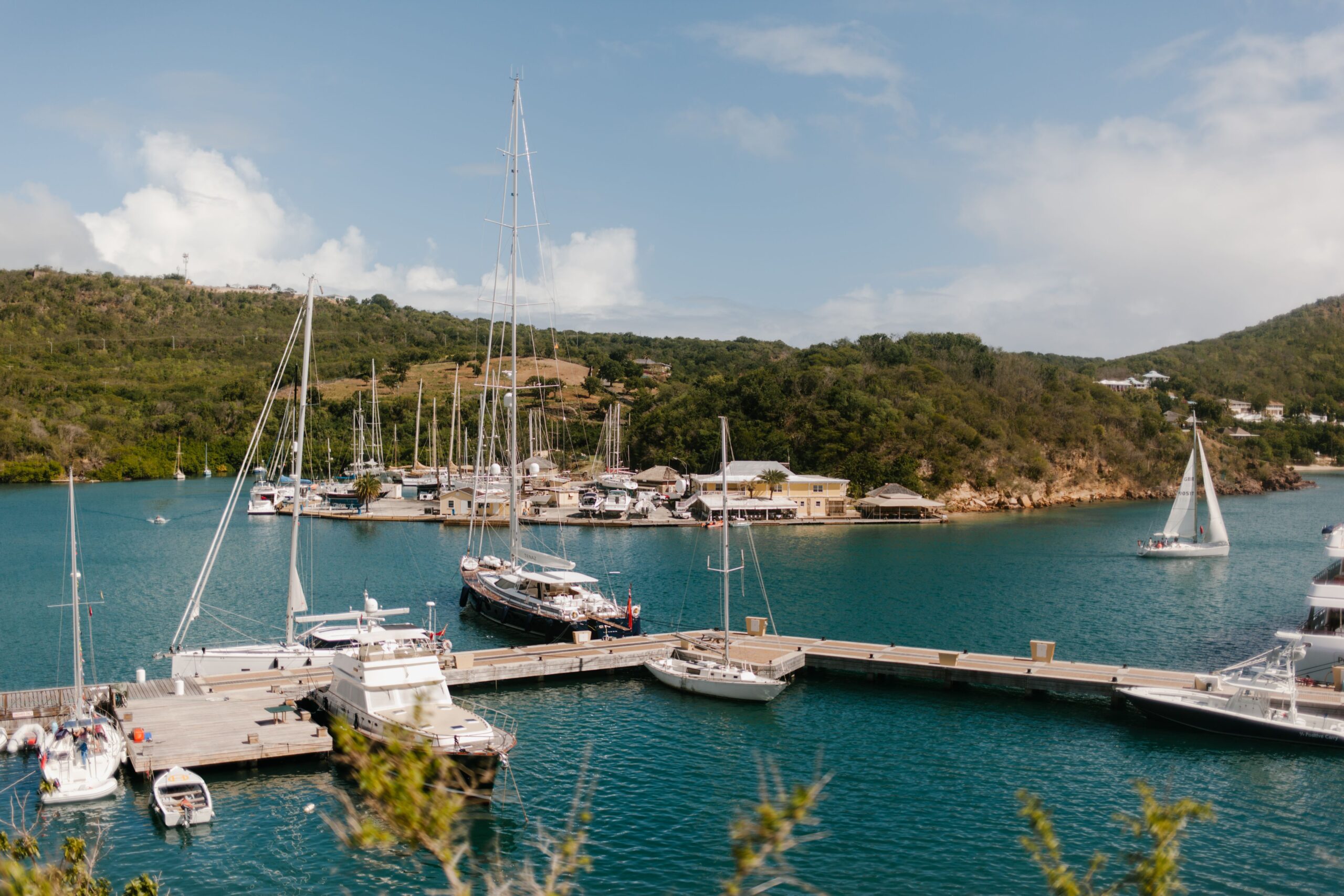
Unlike destinations where “marina lifestyle” is mostly marketing language, English and Falmouth Harbours host an actual, bustling yachting community for much of the year. Falmouth Harbour Marina and the Antigua Yacht Club Marina accommodate everything from classic wooden sloops to some of the largest sailing and motor yachts afloat, and the area comes alive each spring during Antigua Sailing Week and the Antigua Classic Yacht Regatta, drawing sailors, crew, and spectators from around the world. For buyers who enjoy being near the water in a way that goes beyond a view — walking to a marina bar for sundowners, chartering a boat on a whim, getting to know a community of liveaboards and captains — this is one of the few places in the Eastern Caribbean where that lifestyle is lived daily rather than imagined.
A walkable, sociable village feel
English and Falmouth Harbours share a compact, walkable layout that is unusual on an island where a car is otherwise a near-necessity. Restaurants, boutiques, a bakery, galleries, and informal beach bars cluster within an easy stroll of most residential pockets, and a short, scenic drive connects the two harbours to each other and onward to Antigua’s south coast beaches. For buyers used to needing a vehicle for every errand, that density of everyday life within walking distance is often one of the more pleasantly surprising discoveries during a first visit.
A range of property types, not just villas
While the hillsides above both harbours are well known for architect-designed villas with sweeping sea views, the area also offers smaller cottages, townhouses within gated developments, and the occasional restored historic building with commercial or mixed-use potential. That range matters for investors: it means there are entry points at more than one price tier, and more than one way to think about end use, whether that is a lock-up-and-leave holiday home, a full-time residence, or a dedicated rental property.
Rental Investment Potential in a Seasonal Hub
Rental demand around English and Falmouth Harbours tends to track two overlapping calendars: the Caribbean’s traditional winter tourism season, and the yachting world’s own migratory patterns, as crews and owners arrive ahead of the Atlantic hurricane season and stay through the spring regattas. That second calendar is a genuine point of difference from many other Caribbean rental markets. Crew and charter guests often need accommodation on short notice, boat owners frequently prefer to rent a home nearby rather than live aboard for weeks at a time during refit or regatta season, and the area’s restaurants and service businesses create steady demand for staff housing as well.
For investors specifically weighing a rental strategy, it is worth having a candid conversation with a local property manager about realistic occupancy rates and seasonal pricing before settling on a figure for projected returns — marketing materials across the region can be optimistic, and the gap between a quiet August and a buzzing regatta week in late April can be considerable. A well-located, well-maintained property in this corner of Antigua tends to be resilient precisely because its demand is not dependent on a single season or a single type of visitor.

What Overseas Buyers Should Know Before Moving Forward
As in the rest of Antigua and Barbuda, non-citizens purchasing property here typically need to apply for a Non-Citizen Land Holding Licence before a sale can complete, a process usually handled by your attorney alongside the purchase agreement. Processing has commonly taken a few months, and licence and stamp duty costs are generally calculated as a percentage of the purchase price, though the exact figures and timelines can shift and are best confirmed directly with a licensed local attorney or your real estate agent before you budget for them, rather than relying on older published figures.
Some buyers in this part of Antigua are also drawn by the possibility of qualifying for citizenship or residency through a real estate investment under Antigua and Barbuda’s Citizenship by Investment Programme, which permits an approved real estate purchase as one of several qualifying investment routes, typically subject to a required minimum holding period before resale. Programme thresholds, fees, and eligible developments are reviewed periodically by the government, so this is very much an area where you will want current, first-hand guidance from a CIP-licensed agent or immigration attorney rather than a figure quoted in an older article — what was accurate even a year or two ago may no longer be.
Beyond the legal mechanics, it is worth budgeting time, not just money, into your plans. Buyers who visit during both a quiet month and a busy one — say, a calm September and a lively regatta week — tend to come away with a far more realistic sense of what daily life and rental performance will actually look like than those who visit only once, in peak season, when everything is at its most charming.
Getting a Feel for Current Market Conditions
Antigua’s broader property market has continued to see healthy interest from North American and European buyers in recent years, with the yachting-adjacent south coast remaining one of the more resilient and sought-after pockets of that demand. Inventory directly on the harbour fronts is limited by geography as much as anything — there is only so much waterfront to go around — which tends to support values in the immediate vicinity of both harbours even when the wider market has quieter stretches. Properties a short drive back from the water, on the hillsides with a harbour or sea view, often represent a more accessible entry point while still capturing much of the lifestyle appeal.
As with any niche coastal market, pricing can vary considerably based on proximity to the water, view quality, land tenure, and the condition of existing structures, so a conversation with an agent who knows this specific stretch of coastline well is far more useful than any general benchmark. What tends to hold true across cycles, though, is that the combination of protected heritage status, genuine yachting infrastructure, and a walkable village feel gives English and Falmouth Harbours a character that is difficult to replicate elsewhere on the island, or indeed across much of the wider Caribbean.
There is something quietly reassuring about a place that has already weathered nearly three centuries of change and still feels, every evening as the boats come in and the harbour lights come on, like exactly the kind of spot worth getting to know slowly.