


Ask most overseas buyers what they know about Antigua & Barbuda, and the conversation almost always stays on Antigua: its 365 beaches, its yachting harbours, its easy flights from North America and Europe. Barbuda, the quieter sister island thirty miles to the north, tends to come up as an afterthought — a day trip, a photo of pink sand, a name half-remembered from a travel article. That is changing quickly, and for investors willing to look a little further afield, the shift is worth understanding before it becomes common knowledge.
A Different Kind of Island
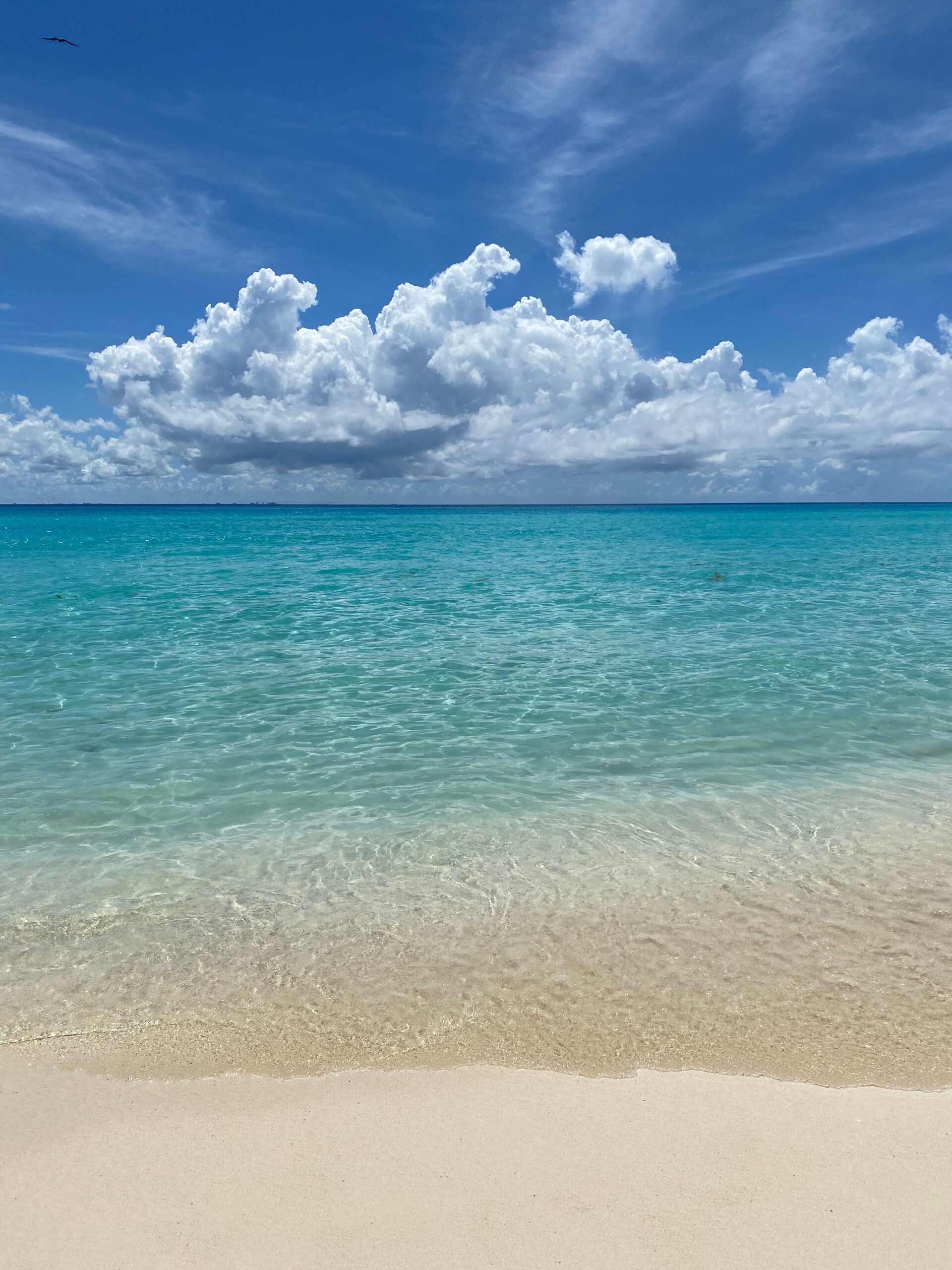
Barbuda is small — roughly 62 square miles, with a resident population usually put at somewhere between 1,500 and 1,800 people, most of them living in and around the only town, Codrington. There is no high-rise skyline, no strip of beach bars, and for a long time there was very little reason for an overseas buyer to think about it as a real estate market at all. What Barbuda does have is scale of a different kind: an uninterrupted stretch of pink and white sand running some seventeen miles along its western coast, a shallow turquoise lagoon separating the mainland from a barrier spit known as the Codrington Lagoon National Park, and one of the Caribbean’s largest frigatebird colonies nesting undisturbed in the mangroves. It is, in short, the kind of landscape that is increasingly rare precisely because it has stayed so undeveloped for so long.
That low density is now the island’s main selling point. Where Antigua offers convenience, infrastructure, and a mature, liquid property market, Barbuda is being positioned — deliberately, by the developers now active there — as the Caribbean’s answer to ultra-private, ultra-low-density luxury living. The two islands are not competing with each other so much as serving different instincts: one for buyers who want an established community and rental market, the other for buyers who want privacy measured in hundreds of acres rather than a fence line.
Getting There Just Got Easier
The single biggest practical obstacle to Barbuda as an investment destination has always been access, and that obstacle has recently become much smaller. Barbuda International Airport, built to accommodate larger jets than the old airstrip ever could, officially opened in October 2024, replacing a facility that had limited the island to small propeller aircraft and the passenger ferry from Antigua. Inter-island flights now connect the two islands in well under half an hour, and the new runway has been designed with an eye toward private and charter aviation — exactly the kind of access the island’s new luxury developments are counting on. For investors, this matters more than it might first appear: a market’s long-term value is tied closely to how easily owners, guests, and eventually tenants can actually get there, and Barbuda’s answer to that question looks very different today than it did even three or four years ago.
A New Wave of Ultra-Luxury Development
Two large-scale projects are doing most of the work of putting Barbuda on the international real estate map. Barbuda Ocean Club, developed by Discovery Land Company, spans two distinct areas — Coco Point, a historic 164-acre peninsula with fewer than 100 planned residences, and the much larger Palmetto Point, covering more than 800 acres with roughly seven miles of beachfront. Offerings there range from custom homesites and turnkey cottages to full beachfront estates, with listed prices commonly running from around $7 million for smaller casitas into the high $20-million range for the largest beachfront properties — figures that move with each release, so current pricing is always worth confirming directly with the development.
Not far away, a second project — The Beach Club, Barbuda, backed by Robert De Niro and James Packer with Nobu’s hospitality brand anchoring the resort side — has begun sales across roughly 400 acres of southwest coastline. The plan mixes beachfront villa lots, larger multi-acre estate parcels, and serviced residences tied to the Nobu Beach Inn, which is expected to open in the second half of 2026. Reported entry prices for this project have started in the region of $7 million for villa lots, moving up toward the mid-teens in millions for the larger estate parcels, with the branded Nobu residences priced from around $12 million. Again, these are the kind of figures that shift with each sales phase, and a buyer should always work from the developer’s current price list rather than press coverage.
What both projects share is a model that will feel unfamiliar to anyone used to shopping for a condo or a villa in, say, Jolly Harbour or Dickenson Bay. These are large, master-planned communities built around membership, architectural review, and a shared amenity base — closer in spirit to a private resort community than to a conventional subdivision.
Land Tenure: The One Thing to Get Right Early
This is also where Barbuda genuinely diverges from Antigua, and where an overseas buyer needs the most careful guidance. Land in Barbuda has historically been held communally under the Barbuda Land Act, with residents able to occupy and use land without individual freehold title, and any large commercial project classified as a “major development” requiring a threshold of community and government approval before it can proceed. That framework has been the subject of real political debate on the island, particularly after Hurricane Irma in 2017, when proposals to shift toward individually registered freehold title were introduced and contested. None of this prevents an overseas buyer from purchasing within an approved, government-sanctioned development like the two described above — both have gone through the necessary approvals to sell to international buyers — but it does mean the underlying legal structure of ownership (freehold title, long leasehold, or a membership-style interest within the development) can vary by project in ways it simply does not on the Antigua mainland.
The practical takeaway is simple: before signing anything, have a local attorney who specialises in Barbuda transactions — not just Antigua & Barbuda generally — confirm exactly what form of title you would be acquiring, how it can be transferred or inherited, and what, if any, restrictions apply to resale. This is one area where the usual Antigua buying process does not transfer over automatically, and it is worth the extra diligence rather than assuming the two islands work identically.
Who Barbuda Actually Suits
Barbuda is not, at least for now, a market for buyers looking for rental yield, a lock-and-leave vacation condo, or a starter investment in Caribbean property. The developments driving activity there are aimed squarely at a smaller pool of buyers who want scale, privacy, and a long investment horizon, and who are comfortable with a market that is still early in its infrastructure build-out — more construction traffic, fewer amenities within a short drive, and a slower pace of resale activity than an established market like Antigua’s own west coast. For that specific buyer, the appeal is genuine: very few places left in the Caribbean combine undeveloped natural beauty on this scale with serious institutional development capital and a newly upgraded airport to support it.
For buyers whose priorities lean toward convenience, an active resale and rental market, or a lower entry point, Antigua itself — with its established neighbourhoods, marinas, and day-to-day infrastructure — remains the more practical starting point, and Barbuda is better understood as what it is: a long-term, high-conviction play on a very particular kind of Caribbean exclusivity.
A Quiet Frontier, for Now
What stands out most, spending time with the plans and renderings now circulating for Barbuda, is how deliberately restrained the ambition is. Nobody involved is proposing to turn the island into another dense resort strip. The pitch, consistently, is the opposite: fewer homes, more land per owner, and an island that keeps most of its seventeen miles of beach exactly as they have always been. Whether that vision holds over the coming decade will depend on execution, on infrastructure that is still catching up, and on a land framework that continues to evolve. But for investors drawn to the idea of getting in early on a place most people have still never properly visited, Barbuda currently offers something increasingly hard to find anywhere in the Caribbean — genuine, unhurried quiet, with the pieces now falling into place around it.